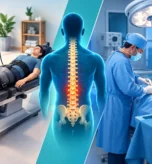
A herniated disc can make ordinary movements feel uncertain. Sitting through a workday, lifting a child, driving a delivery route, or turning in bed may trigger sharp pain, tingling, numbness, or weakness that travels into an arm or leg. For many people, non surgical treatment for herniated disc offers a practical first path forward: reducing irritation, restoring confident movement, and building the strength needed to return to daily life.
A disc diagnosis does not automatically mean surgery is necessary. Many disc-related symptoms improve with conservative care, time, and a plan that matches the person rather than a one-size-fits-all protocol. The right approach begins with a careful evaluation, clear safety screening, and attention to how symptoms affect work, sleep, mobility, and quality of life.
What a Herniated Disc Can Feel Like
Spinal discs are cushions between the bones of the spine. Their firm outer layer surrounds a softer center. When disc material bulges or pushes through a weakened area, it can irritate nearby nerves. This is commonly called a herniated disc, although the size and location of the disc change do not always match the intensity of symptoms.
In the neck, a herniated disc may contribute to pain that travels into the shoulder, arm, or hand. In the low back, it may cause sciatica – pain, tingling, burning, or numbness that travels through the buttock and into the leg or foot. Some people mainly feel stiffness and local back pain; others notice weakness or have trouble standing, walking, or tolerating certain positions.
Symptoms can begin after a lifting incident, a car accident, repetitive work, or a sports injury. They may also develop gradually. A thorough clinical assessment helps distinguish disc-related nerve irritation from other possible causes of back, neck, hip, shoulder, or leg pain.
Non Surgical Treatment for a Herniated Disc Starts With Assessment
Before treatment begins, a clinician should take a detailed history and perform a focused examination. This may include checking posture, range of motion, muscle strength, reflexes, sensation, walking mechanics, and the movements or positions that reproduce symptoms. When appropriate, imaging or referral for additional medical evaluation may be recommended.
The goal is not simply to give the disc a label. It is to understand what is limiting function, whether a nerve is under meaningful stress, and which forms of movement and treatment are appropriate at that stage of recovery.
Conservative care often works best when it is active and progressive. Rest may be useful briefly during a severe flare, but prolonged bed rest can lead to more stiffness, reduced conditioning, and greater sensitivity to movement. Most people benefit from staying gently active within a tolerable range while avoiding activities that sharply worsen symptoms.
A Personalized Conservative Care Plan
No two herniated disc cases look exactly alike. A warehouse worker who needs to lift safely, an office employee who cannot sit through meetings, and a runner hoping to return to training need different functional goals. Care should reflect the location of the disc issue, neurological findings, symptom irritability, health history, and the demands of daily life.
Pain Relief Without Relying Only on Medication
During an acute flare, the first priority may be calming pain enough to allow normal movement, sleep, and participation in care. Depending on the examination, treatment may include gentle joint mobilization, soft-tissue therapy, guided positioning strategies, acupuncture, or technology-assisted modalities intended to support comfort and tissue recovery.
These options are not meant to mask a serious problem or replace medical care when it is needed. They are tools that may help reduce guarding and improve tolerance for movement while the broader rehabilitation plan takes effect. Your provider may also coordinate with your primary care clinician or another medical specialist if medication, imaging, or additional treatment is appropriate.
Targeted Spinal and Extremity Care
Chiropractic adjustments and joint mobilization may be considered when a patient is an appropriate candidate. The approach should be tailored to the individual, not delivered automatically because back or neck pain is present. Gentle techniques, positioning, and treatment areas can be modified based on symptom response, nerve findings, and comfort level.
For some patients, manual care can help improve joint motion and reduce muscle tension that develops around a painful spinal segment. For others, the best early approach may focus more on movement guidance and rehabilitation. A responsible plan adjusts as symptoms change rather than pushing through pain.
Rehabilitation Exercise That Builds Capacity
Exercise is often one of the most valuable parts of non-surgical care. The right exercises are not necessarily the hardest ones. Early rehabilitation may use simple, controlled movements to determine which directions reduce or centralize symptoms – meaning pain moves out of the arm or leg and becomes less widespread.
As symptoms settle, rehabilitation can progress toward core stability, hip mobility, balance, endurance, and safe lifting or reaching mechanics. A person recovering from low back and leg pain may need to improve hip strength and trunk control before returning to repeated bending or carrying. Someone with neck and arm symptoms may benefit from postural endurance, shoulder-blade control, and work-station changes.
Consistency matters more than intensity. A short home program completed correctly and regularly can support the hands-on care provided in the clinic and give patients more confidence in managing flare-ups.
Spinal Decompression and Other Supportive Options
For selected patients, spinal decompression may be incorporated into a conservative treatment plan. This controlled form of traction is intended to gently reduce spinal loading and may help some people with disc-related symptoms tolerate movement and rehabilitation more comfortably. It is not appropriate for every diagnosis or every stage of care, which is why screening matters.
Supportive treatments should serve a clear purpose: easing symptoms, improving mobility, or helping a patient participate in active recovery. They should not become a substitute for restoring strength, movement confidence, and healthy daily habits.
Daily Decisions That Can Influence Recovery
People often ask whether they should stop working, stop exercising, or avoid all bending. The answer depends on the severity of symptoms and the physical demands involved. Temporary activity modifications can be helpful, especially when certain tasks cause radiating pain or weakness. However, the long-term goal is usually not to fear movement. It is to rebuild tolerance for the movements life requires.
Small changes can make a meaningful difference. Taking regular standing or walking breaks can help people with desk-based jobs. Commercial drivers may benefit from seat positioning, scheduled movement breaks, and strategies for getting in and out of the cab without twisting under load. Workers who lift or carry may need coaching on load placement, pacing, and gradual return to heavier tasks.
Sleep position, stress, smoking status, general activity level, and recovery time also matter. Pain can make the nervous system more protective, which is one reason a calm, step-by-step plan is often more effective than trying to force a rapid return to every activity at once.
When Specialist Care or Surgery May Be Needed
Conservative treatment is appropriate for many people, but it is not the right answer in every situation. New or worsening muscle weakness, loss of bowel or bladder control, numbness in the groin or saddle area, fever with severe spinal pain, or significant symptoms after major trauma require urgent medical assessment.
Persistent or progressive neurological deficits also warrant prompt evaluation. If symptoms do not improve as expected, if pain remains severe despite appropriate care, or if examination findings suggest a more complex condition, referral may be necessary. At Farmington HealthCare and Chiropractic, coordinated care with orthopedic specialists, physiatrists, neurologists, and primary care providers helps ensure patients receive the level of care their condition requires.
Surgery may be considered when there is significant nerve compression, progressive weakness, or disabling symptoms that do not respond to an adequate trial of conservative management. Choosing surgery is not a failure, and choosing conservative care is not a delay when it is clinically appropriate. The best decision is the one that protects neurological health and supports the patient’s long-term function.
Recovery Is Measured by Function, Not Just Imaging
Disc findings on an MRI can remain visible even when a person feels and functions much better. For that reason, recovery should be measured by meaningful changes: walking farther, sleeping more comfortably, sitting through work, returning to a sport, lifting with confidence, or getting through the day with less fear of pain.
A herniated disc can be disruptive, but it does not have to define what you can do next. With a careful evaluation, appropriate conservative care, and a plan that progresses at your pace, many people can move from protecting a painful back or neck toward active, capable living again.